Clinical Reasoning Practice with Virtual Patients
Use CyberPatient clinical cases to practise patient assessment, differential diagnosis, investigations and management decisions.
How do virtual patients support clinical reasoning?
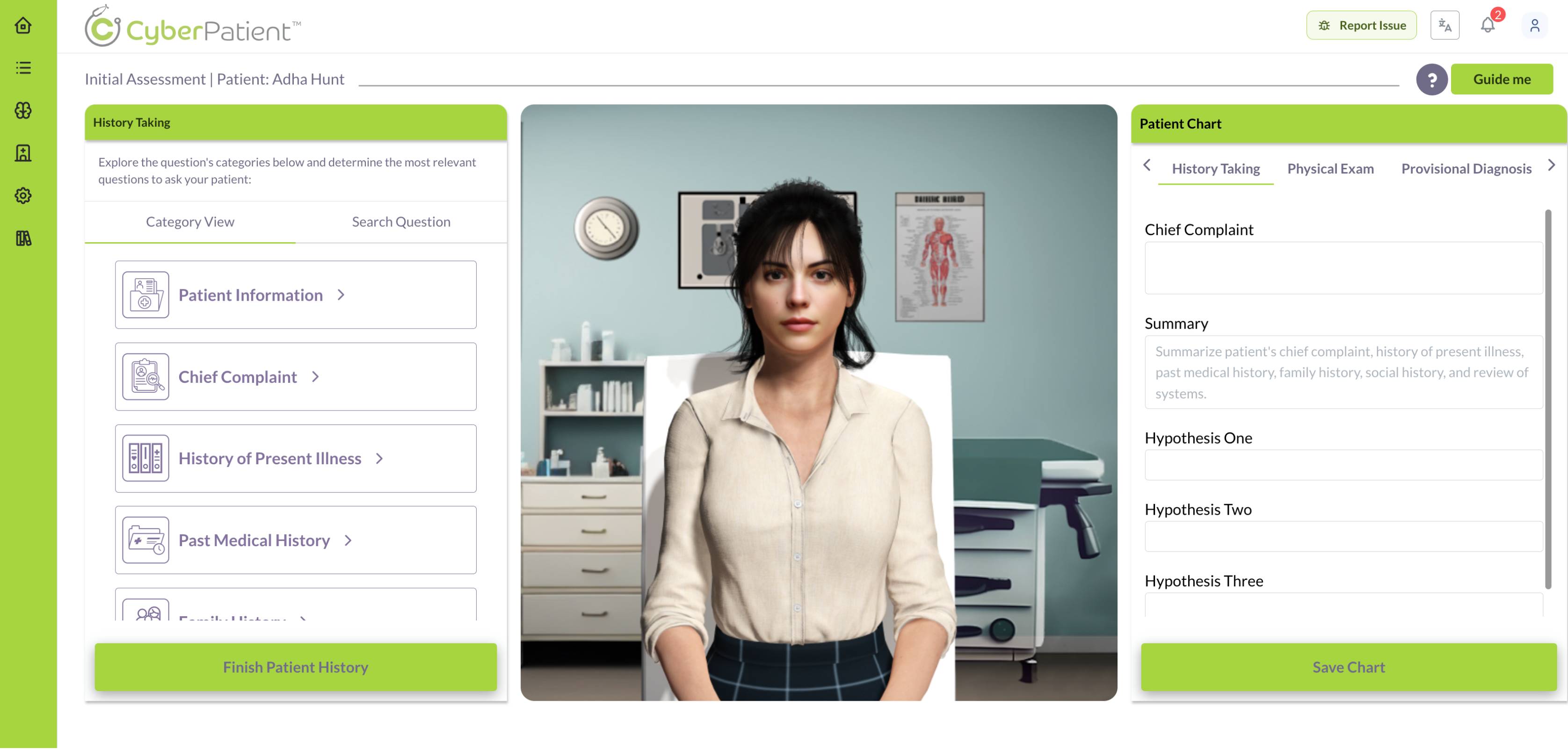
Clinical reasoning connects a patient’s history and examination findings to a differential diagnosis and management plan. CyberPatient gives learners a structured case in which to practise those connections.
A practical learning sequence
Gather a history, select relevant examinations and investigations, compare possible diagnoses, and choose a management approach. Explain why each decision follows from the available findings.
Use feedback to guide the next attempt
Review case feedback, identify missed information and revisit the reasoning behind a decision. Educators can pair case practice with discussion and debriefing rather than treating a final score as a complete account of learning.
What evidence should educators review?
The evidence page describes published CyberPatient studies, populations, findings and limitations. Study results do not establish identical outcomes for every learner, curriculum or clinical setting.
Can students practise independently?
CP OnCall offers individual access to virtual patient cases. Institutional CyberPatient is intended for educators exploring simulation within their teaching programme.
Published research and study limitations · Request institutional access
Patient assessment and differential diagnosis practice
Clinical case simulation lets learners connect a patient history with examination findings, investigations and possible diagnoses. Use these virtual clinical scenarios to discuss diagnostic reasoning, explain investigation choices and review patient management decisions with an educator.